Selection Kenya
Generation Programme Kenya


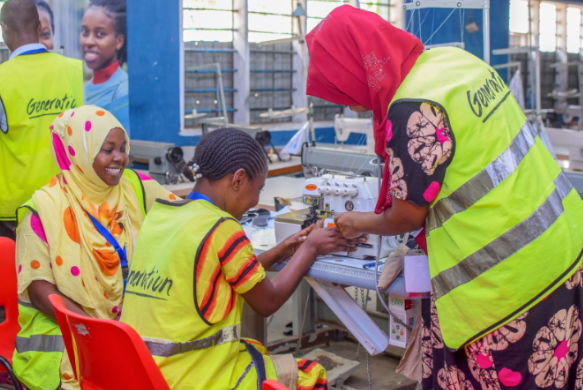
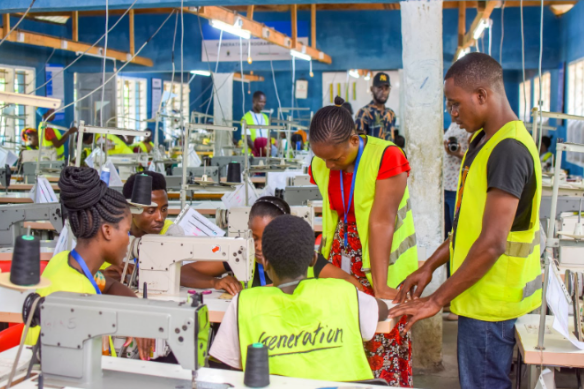
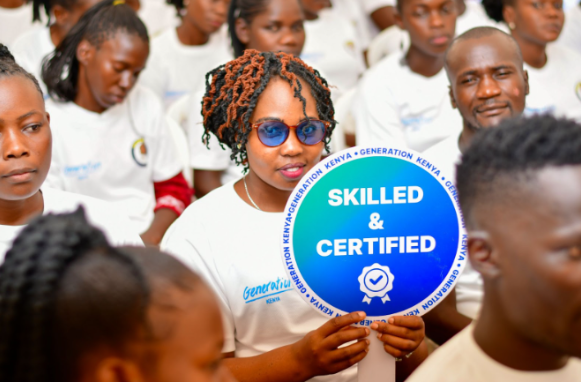
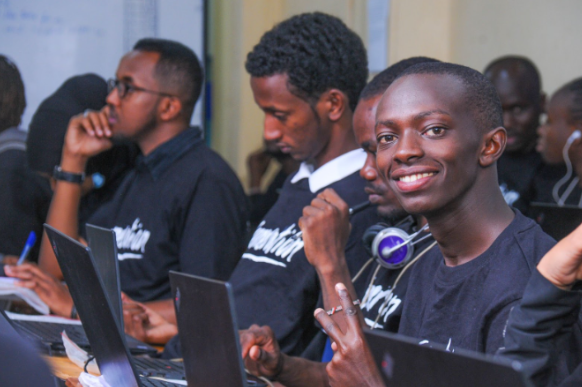
Generation Programme Kenya (Generation Kenya) is a nonprofit that delivers sector-leading employment and income results across 8 professions and 27 countries. We prepare, place and support Kenyan youth into decent employment that would otherwise be inaccessible while simultaneously seeking to improve how education-to-employment systems function. Under our project Skills. Opportunities. Growth., our aim is to effectively enhance the livelihoods of underserved youth sustainably. We will achieve this goal by equipping Kenyan youth with the necessary market-oriented skills to prepare them for employment opportunities in the technology, apparel manufacturing, and customer service sectors. As a recipient of the 2024 exclusive top-up call, we will accelerate our ambitious expansion efforts, enabling us to unlock the potential of thousands more youth to secure meaningful work.
The Problem
Kenya faces a structural youth employment crisis driven by demographic pressure, persistent skills mismatches, and gender‑based disparities that limit equitable access to economic opportunity. The country’s population is markedly young – with a median age of ~19.5 years and children (0–14) comprising ~37% of the population – signalling a rapidly expanding future workforce that will intensify demand for quality jobs and work‑ready skills. Youth unemployment remains a core challenge: 11.9% of Kenyans aged 15–24 were unemployed in 2024, a slight improvement from 12.0% in 2023. Gender gaps compound the problem: 19% of young women are not in education, employment, or training (NEET), compared with 11% of young men, indicating durable barriers linked to social norms, caregiving responsibilities, and uneven access to training and placement pathways.
The regional context heightens the urgency. Sub‑Saharan Africa will need approximately 72.6 million additional youth jobs by 2050 to absorb new labor market entrants, underscoring the need for solutions that scale beyond isolated programs. Within Kenya, employers continue to report difficulty finding work‑ready talent, reflecting a skills mismatch between graduate capabilities and industry requirements, particularly in technical and behavioral competencies. Despite meaningful public‑ and private‑sector efforts—including TVET expansion, enterprise financing mechanisms (e.g., Youth Enterprise Development Fund, Hustler Fund), and youth‑focused initiatives such as NYOTA, the gap between the supply of skilled youth and demand for productive employment persists. Closing this gap requires coordinated, employer‑validated skilling, equitable access to learning and work, and stronger pathways into quality jobs that harness Kenya’s demographic advantages for inclusive growth.
Specific to Generation Kenya, our learners (62% women) face significant structural barriers to access education and employment. This is expressed in the fact that 62% of our learners only have a primary or secondary school degree. Financially, over one-third of our learners cannot meet their daily financial needs or receive financial assistance. When they come to us, 93% are unemployed and the remainder are underemployed.
The Solution
Our project Skills. Opportunities. Growth. aims to close the skills gap and address the shortage of skilled workers in the manufacturing, customer service and Business Process Outsourcing (BPO) sectors. We seek to establish a scalable tested model to match youth with employment opportunities, in collaboration with our partners in these sectors, including employers with whom we co-design programs to meet entry-level needs.
In this project, we define our impact according to breadth, depth, and durability. Breadth is the total and annual volume of our graduates and employers. Depth refers to the employment and income outcomes for our alumni three to six months following graduation. Durability is the sustainability of employment, income, and well-being outcomes for alumni over time.
In the long term, we aim to achieve the following impact:
Breadth: Provide high-quality training for 11,950 youth (50% young women) using our existing curriculum for the three sectors that we operate in – tech, apparel manufacturing, and customer service. This will provide them with valuable technical and soft skills relevant to the market.
Depth: 7,960 youth matched to decent jobs within our three sectors.
Durability: Provide mentorship and psychosocial support to our youth beneficiaries to support them to grow their careers with an aim of achieving sustainable income and well-being outcomes over time.
We will also collaborate with other counties to recruit and train youth in TVETs and deliver demand-driven programs.
Additionality
CFYE support will enable us to scale our programs to meet the market demand by increasing the number of learners, reducing the cost per learner to deliver training and support, enabling scale, and reducing cost per hire through improved operational efficiency.
In addition, CFYE funding will facilitate us to review and revise our strategies on how young people we engage can be better involved in co-designing, managing, monitoring, and evaluating key components along the education-to-employment value chain. We also anticipate that through a partnership with CFYE, there will be lessons to be shared to collaboratively increase economic impact for our youth. CFYE can also connect us to the critical stakeholders and partners that are currently engaged within the scope of these impact areas.
Without CFYE’s support, it would take longer to build an economically sustainable model to support youth.