Country Portfolio Sudan
CFYE launched a Call for Solutions in Sudan in 2020 to support private sector-led initiatives that tackle youth and women unemployment. The Call invited applications primarily focused on creating medium-skilled jobs in growth sectors as well as applications that aimed to develop innovative digitization solutions. Initiatives striving to match and improve jobs also formed a big part of the Call’s focus. On April 15th 2023, war erupted in Sudan resulting in thousands of deaths, over 7 million internally displaced, and more than 1.5 million have fled the country.
We continue to support our Implementing Partners in Sudan as they continue their resilience especially during such challenging times.
The below portfolio represents all the selected partners in response to the Call for Solutions. Our Country Lead for Sudan is Ahmed Darwish.
**The Scoping Report was carried out in 2020, before conflict erupted in the country in April 2023.
Sudan’s Job Market & Youth
In Sudan, unemployment has increased significantly in recent years, affecting young people the hardest. According to recent estimates, young people are twice as likely to be unemployed as adults.
Before the war unemployment was affecting different categories of Sudanese youth, but more so those living in urban areas with higher education. Now, since the war erupted, unemployment is affecting all categories and is expected to reach 47% of the population, that is 17 million unemployed. This creates a bleak situation for the Sudanese youth, especially considering that over 70% of the Sudanese population is under 25. Whilst before the war, young women were already facing extra barriers in finding decent work in Sudan as discrimination against women and girls in health, education, and economic participation limits their development opportunities.
Since the war, the situation has become alarmingly more dire for women who face many dangers especially from the militant groups. Towards end of 2025 and with the beginning of 2026, the RSF militia were fought out of many areas including from the tri capital which was liberated in March of 2025, as of end of 2025 early 2026, the Sudanese Military has been winning back more areas starting with Al Diling and Kadugli in the West.
Elfasher, however, under siege by the RSF since May 2024 when the RSF encircled the city and cut off supply routes leading to a “total famine” condition, fell fully into the control of the RSF in October of 2025 when mass atrocities took place including mass executions, a reported 27,000 deaths, plus rape and abductions for ransom, leading to almost 100,000 fleeing the city.
Although women are less likely to participate in the labour force, those who do are more likely to be unemployed and those who work earn lower wages than men.
There is a very large informal economy in Sudan, with 85% of workers engaged in vulnerable employment and 60% of the labour force engaged in subsistence agriculture. Starting businesses struggle to get started in the formal economy because of the absence of regulations and support for entrepreneurship. This further hinders the growth of small and medium enterprises (SMEs) that are already operating in a harsh economic environment. Both access to financial and non-financial resources are scarce for start-ups. With CFYE’s Call for Solutions in Sudan, we aim to help more businesses have the necessary resources to stimulate a decent work environment for the Sudanese youth.
Our Impact
Our Portfolio in Sudan
Sudanese youth are highly motivated and express a great desire for finding decent work. However, the country’s labour market allows minimal chances for young people to find meaningful employment.
Combining youths’ aspirations with the needs of the business ecosystem in Sudan, we had developed a diverse portfolio that caters to the needs of the country’s labor supply and demand. Our portfolio consisted of partners working in agri-business, manufacturing, setting up acceleration programs to help businesses grow, and initiating training centers to upskill Sudanese youth in ICT skills. These partnerships planned to realize more than 4.400 decent jobs. More than 2.300 of these projected jobs will be newly created jobs. Others to be accomplished through the other CFYE routes: matching and improving.
The war has worsened the situation dramatically as the main employing sectors, based in the capital Khartoum, have mostly been destroyed or taken over by the RSF militias. Unfortunately, the war has forced one of our Implementing Partners (FairAgro Foods) to terminate operations whilst our remaining three Implementing Partners (249 Startups, iATL International and Alsalam Factory) successfully restarted their projects in December of 2024, after a period of robust redesign, creative solutions and resulience by the IPs, as well as restructuring and fleixbility from CFYE and DDE to enable them to resume operations on their CFYE projects.
iATL ICT Training centre moved their operations to Egypt where they partnered with a local training centre to deliver training on several ICT modules geared towards Egyptian market demand. They train both Egyptian and Sudanese youths and have partenred with an Employment partner to hire some of the trianess who have successfully completeed their trainings.
Alsalam Factory established a new factory in Egypt, where they train and hire both Egyptians and Sudanese employees and are expanding their product line up to other textile products, as well as entering the retail market in Egypt, and exploring expansion into Chad and Cameroon. They continue to serve the Sudan market from Egypt.
249Startups continue training and financing Sudan-based startups in the 2nd cohort of their CFYE funded accelerator (Rhino Accelerator) with some of the startups from the first cohort expanding into nearby Egypt, Uganda and KSA.
Over 2.700 of the planned jobs (more than 50%) in the portfolio will be for Sudanese women to help them increase their participation in the labour market.
We are very proud to see our partners tackle diverse employment issues, focused on improving the livelihoods of both urban and rural youth populations especially during such challenging times and the great losses already suffered by Sudanese, priceless losses in lives, well-being, and properties. Putting the youth’s voice in the center of their operations is a priority for each partner below.
CFYE’s grant will help us kick off the project and reach bigger scales, ultimately impacting more young people in Sudan. Not only will the fund enable us to establish and increase our financial capacity, but its technical assistance will lead to a well-developed and gender-sensitive business model.
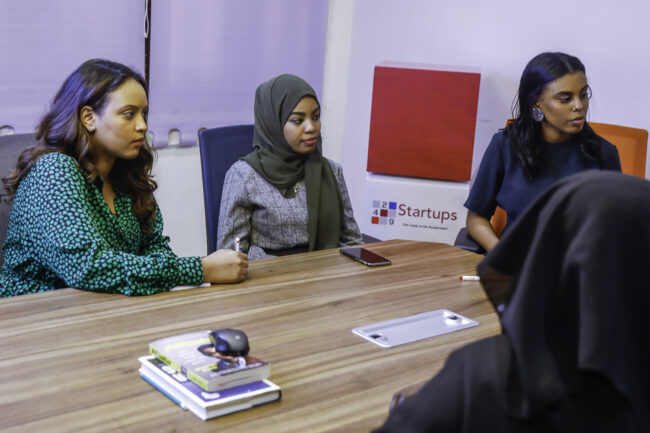
CFYE’s grant will help us introduce the acceleration and equity investment-backed programs concept to the Sudanese ecosystem and increase the impact of already operating startups that not only create meaningful jobs for youth but also ensure the existing ones are improved.
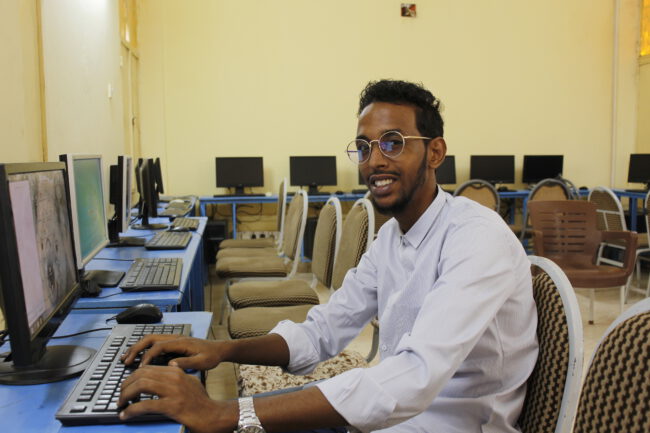
CFYE’s support will enable us to build a well-established state-of-the-art training center with a vast capacity to fit many youths. Moreover, since our project mainly focuses on women, CFYE’s technical assistance in gender inequality and social inclusion will be essential for positive social impact.