Creating Space to Sign: Diana & Kalanzi’s Path to Inclusive Work in the Green Economy
“Disability is not Inability.”
In Uganda, where 12.5% of the population live with a disability (NUDIPU, 2019), these words are more than just rhetoric, they are a lived reality and constant battle for those that remain excluded from the labour force due to persistent stigma, limited accessibility, and deeply rooted misconceptions.
Diana Namalwa is no stranger to these barriers as a young, non-verbal Deaf woman. Residing in Kijjabwemi village, Diana is married, a mother to three children, and currently works at Eco Brix; a waste management social enterprise that recycles plastic and creates value added through circular economy and closed loop practices.
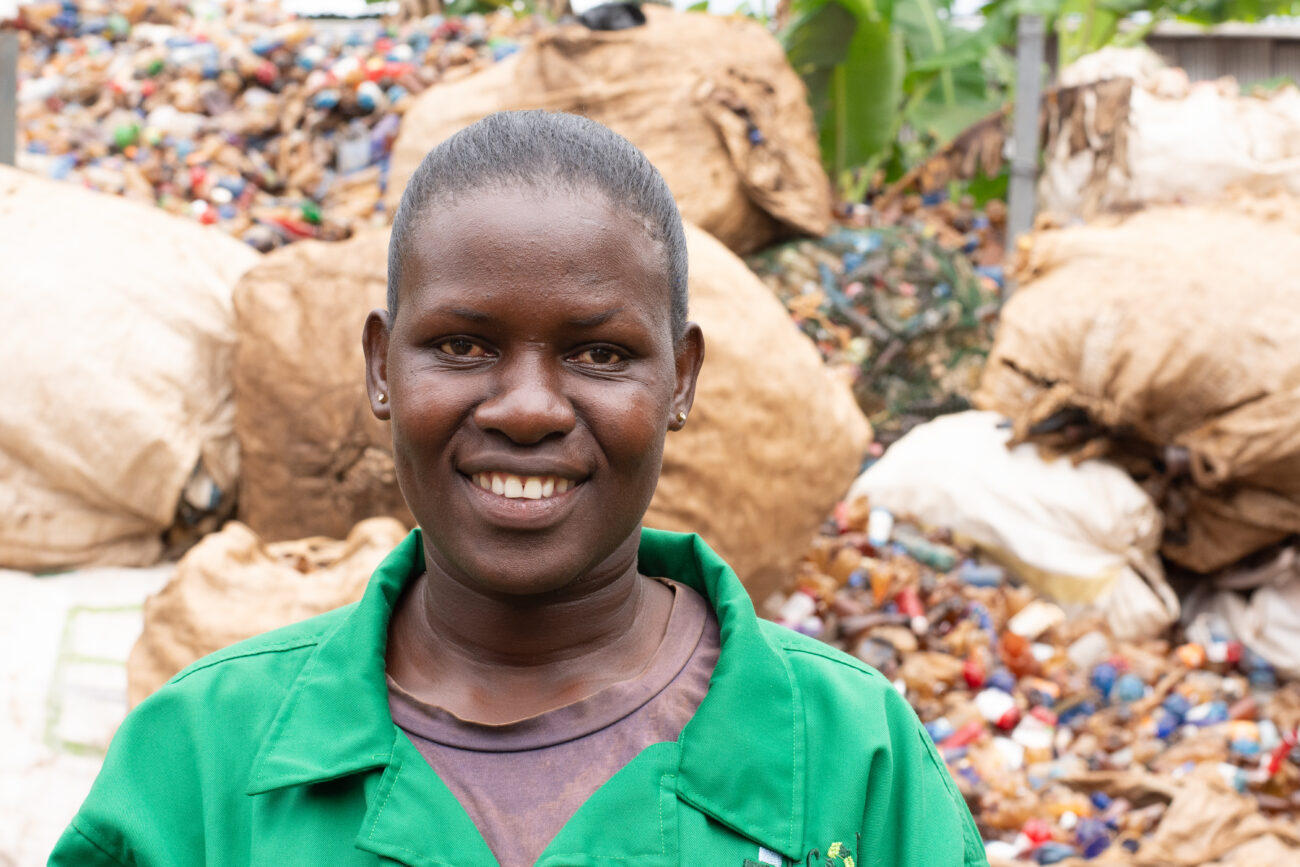
When we met Diana on an overcast day in Masaka at Eco Brix’s facility, she introduced herself and her sign name, a personal sign used to uniquely identify someone. She raised her right hand and formed a fist with her thumb out, before moving it to her mouth like a pacifier – a habit from when she was younger that became her distinct identifier. She would later give us each our own, insisting, “You must know your sign names wherever you go.”
Diana recalls being born into a vulnerable family and orphaned at a young age as both her father and mother passed away, leaving her grandmother to raise her. Despite the familial hardships, she was able to complete her primary education and from there, attended a vocational school where she learned to knit. However, after graduating, opportunities were scarce.
“People always oppress us – they feel we cannot do anything. But to tell you the truth, we the deaf, we can do better than others,” signs Diana to our interpreter.
Finding a Way Forward: The Call to Eco Brix
Diana eventually found herself shifting to salon work to support her family, but COVID-19 hit before she had a real chance to make ends meet. With no income to keep the salon open, Diana was homebound until 2024, when she came across Eco Brix advertising a call for young people with disabilities to join their company in the local newspaper. “I filled out the application letter, I went to the Local Council One Chairperson, I photocopied my national ID and submitted it to Madame Salima in the office. They accepted and they gave me a job.”
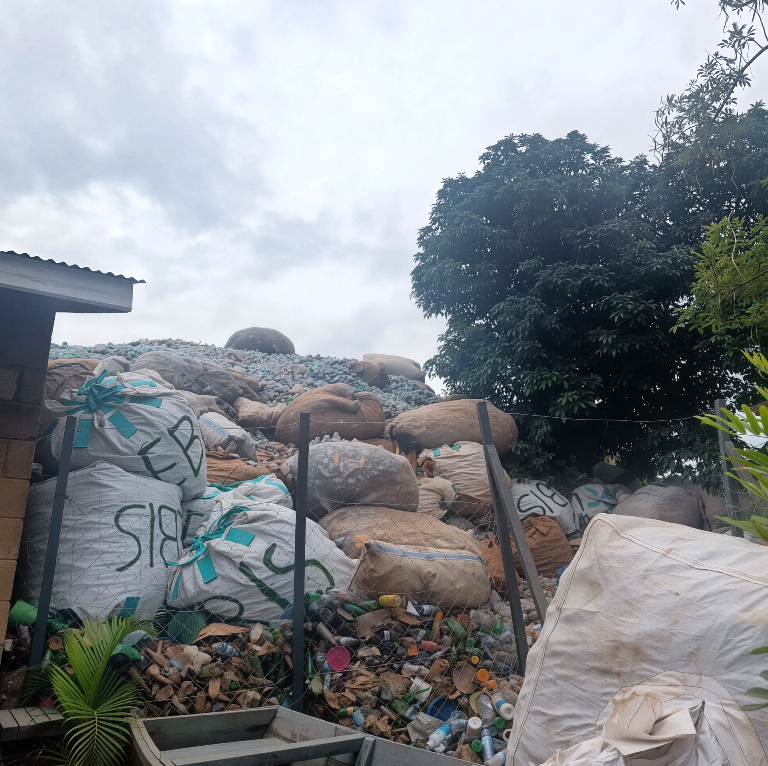
Now a year in, Diana credits Eco Brix with changing her life. With a stable income, she is able to take care of her children and the grandmother that raised her. She describes the work as ‘soft and simple’, because it is merely sorting colors; green, red, and blue.
“For now, I haven’t met any challenge, but what I’ve learned is associating with the community – because where we live, we did not feel that we could work in an environment where all categories of people are available – but we are learning to associate with others.”
When asked what advice she would give other young people with disabilities navigating the job market, it is simple, “They should feel confident and apply for jobs where necessary. They should not say that ‘I have a disability, I cannot do this, I cannot do it with hearing people’, they should feel confident and proud of themselves and join a work team where they have an opportunity.”
Diana finishes with a final sign of appreciation to Eco Brix for employing young people like her and giving them a fair chance, as well as a,
“Thank you our visitors who have come and again, chose a person with a disability like me to have a word with the entire world.”
Kalanzi Godfrey: When Hands Speak Louder Than Words
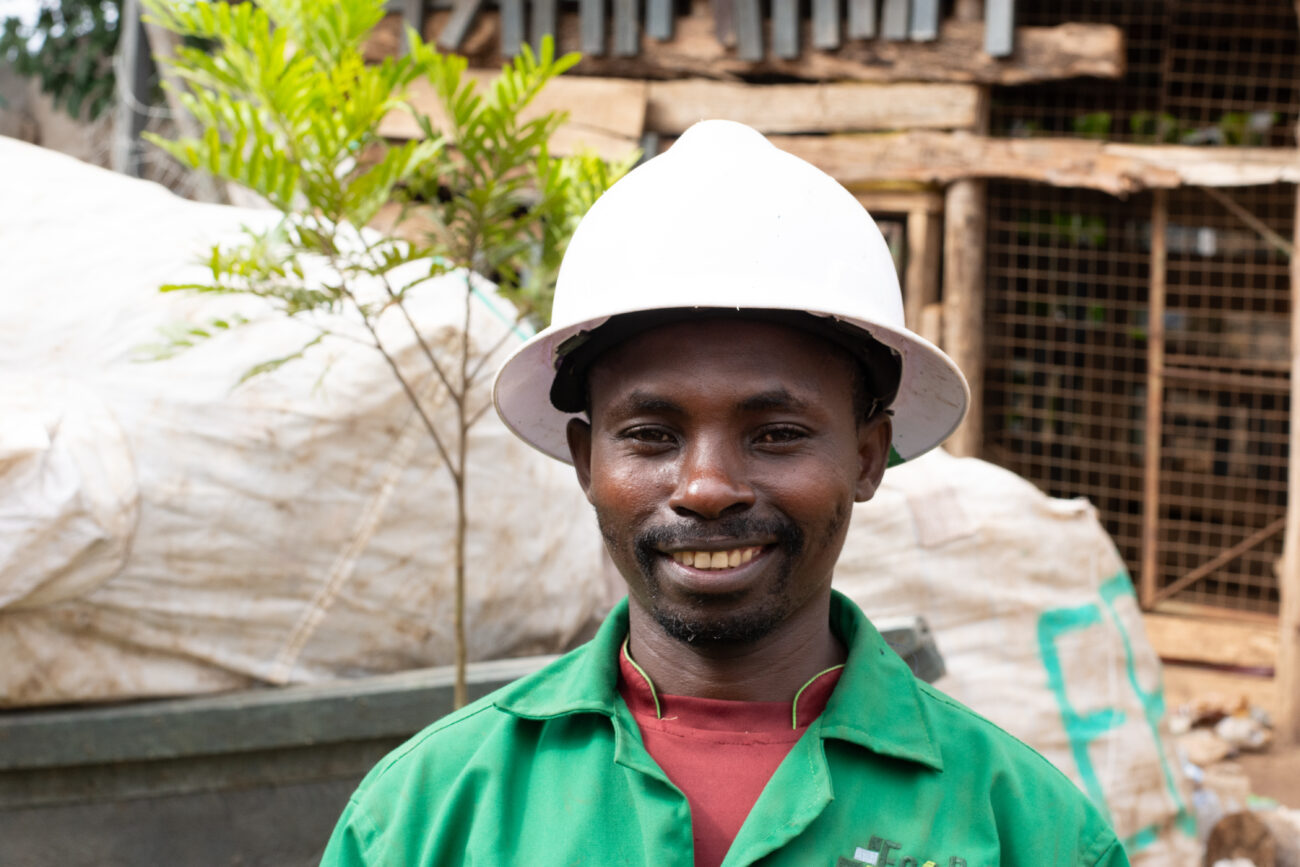
Where Diana found her place within the factory walls, Kalanzi Godfrey had spent years working on the outside of it – with a similar mission. He greets us with a smile and sign of his name; a double swipe of his nose using the right pointer finger and thumb, before starting his story.
At 34 years of age, Kalanzi is Deaf, non-verbal, and lives with a physical disability. For several years now, he has been part of the deaf community’s grassroot efforts in plastic recycling, collecting bottles and mobilising young people like himself to help one another develop skills and gain experience.
Like Diana, COVID-19 became a debilitating, yet crucial turning point in his life. As a passionate evangelist at the time, Kalanzi relied heavily on his community for connection and purpose, but when lockdowns were imposed, he found himself with no partners left, income halted, and daily life disrupted. Kalanzi also had to navigate new barriers as, like many others in the Deaf community, he could not understand the exact circumstances of what was happening due to inaccessible news and information services.
Finding work was no easier, Kalanzi recalls, “If we apply for a job somewhere, even though we have qualifications, people say how are we going to work with you? A person who is not talking, a person who is not studying, who is not hearing?”
In 2024, things began to shift when word spread that Eco Brix was recruiting. Kalanzi watched as some of his peers gained access to meaningful opportunities, not only earning a steady income, but also becoming examples of what was possible for their wider community.
As he continued his own recycling initiatives, and more recruitments were made, he was finally given the opportunity the following year to join Eco Brix as a (full-time) employee.
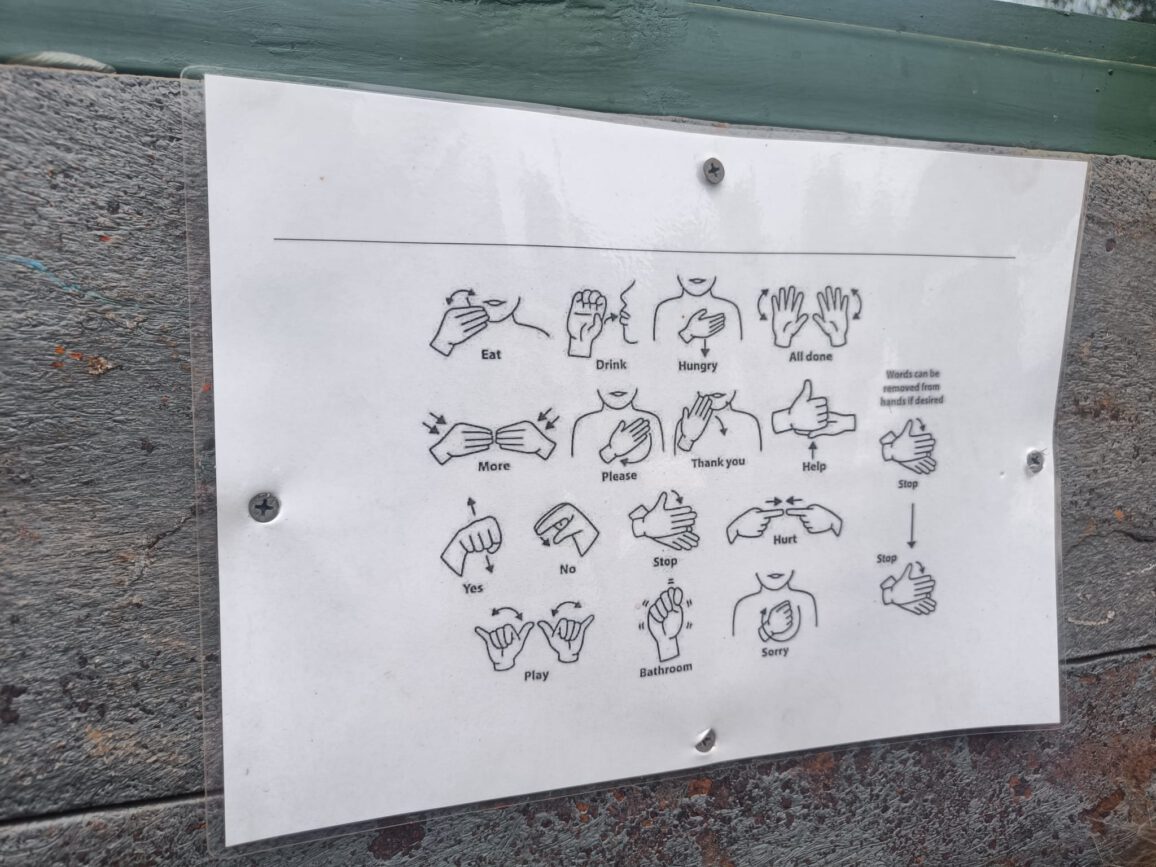
At first, the work was hard, “I thought, I cannot make it the first time I stepped in here. Can I sort around five sacks a day?” Despite the initial hesitations, Kalanzi grew more comfortable and efficient in his role over time, eventually packing ten or more plastic sacks a day. What once felt overwhelming became manageable, especially because of the environment and support Eco Brix cultivated for him and other young employees with disabilities.
“[Ecobrix] has empowered us for sure, the work we are doing here, and the way they handle things here. They showed us a good environment, the way they mobilise us, we’re given equal opportunities, and there’s no segregation…we are treated equally. They always advise us about health issues, about our safety. Eco Brix is like a parent that we never got,” Kalanzi signs, with a big smile on his face.
He concludes with a hope that extends beyond himself – to be an advocate for his fellow deaf still searching for decent employment opportunities,
“In the future, we want to empower ourselves, while making one voice and one family that will help others.”
When Sign Creates Systems: Inclusion by Design
Eco Brixs’ innovative approach to waste management and inclusion has made a tangible impact both on the environment and the lives of young people like Diana and Kalanzi. By creating accessible green job opportunities for people with disabilities, women, and youth, Eco Brixs is not only actively tackling the plastic waste crisis but also promoting meaningful social and economic inclusion.
With support from CFYE, their efforts – combined with funding, technical assistance, and a commitment to equity – have led to the recycling of millions of plastic bottles and the creation of sustainable income streams, ensuring people with disabilities are not just included, but equipped and supported to lead, earn, and thrive.


More stories
Interested in more?



Vacancy
Workshop: From Fragility to Opportunity – Operating and Scaling in Post Conflict Contexts
 Faatimah Clarke
 March 13, 2026