A Community Built in 100Weeks
In the rural town of Mitala Maria in Central Uganda, groups of young women gather each week for entrepreneurship training offered through a collaboration between Simbuka, 100Weeks programme, and CFYE. Through the years, these sessions have grown into safe and trusted spaces where women learn practical financial skills and openly share their personal joys and challenges.
Overseeing this work is Catherine Tabingwa, Senior Program Manager for 100Weeks Uganda. Their model is intentionally simple: Each woman in the programme receives €8 in mobile money once a week for a period of 100 weeks, alongside weekly training and peer-to-peer learning sessions.
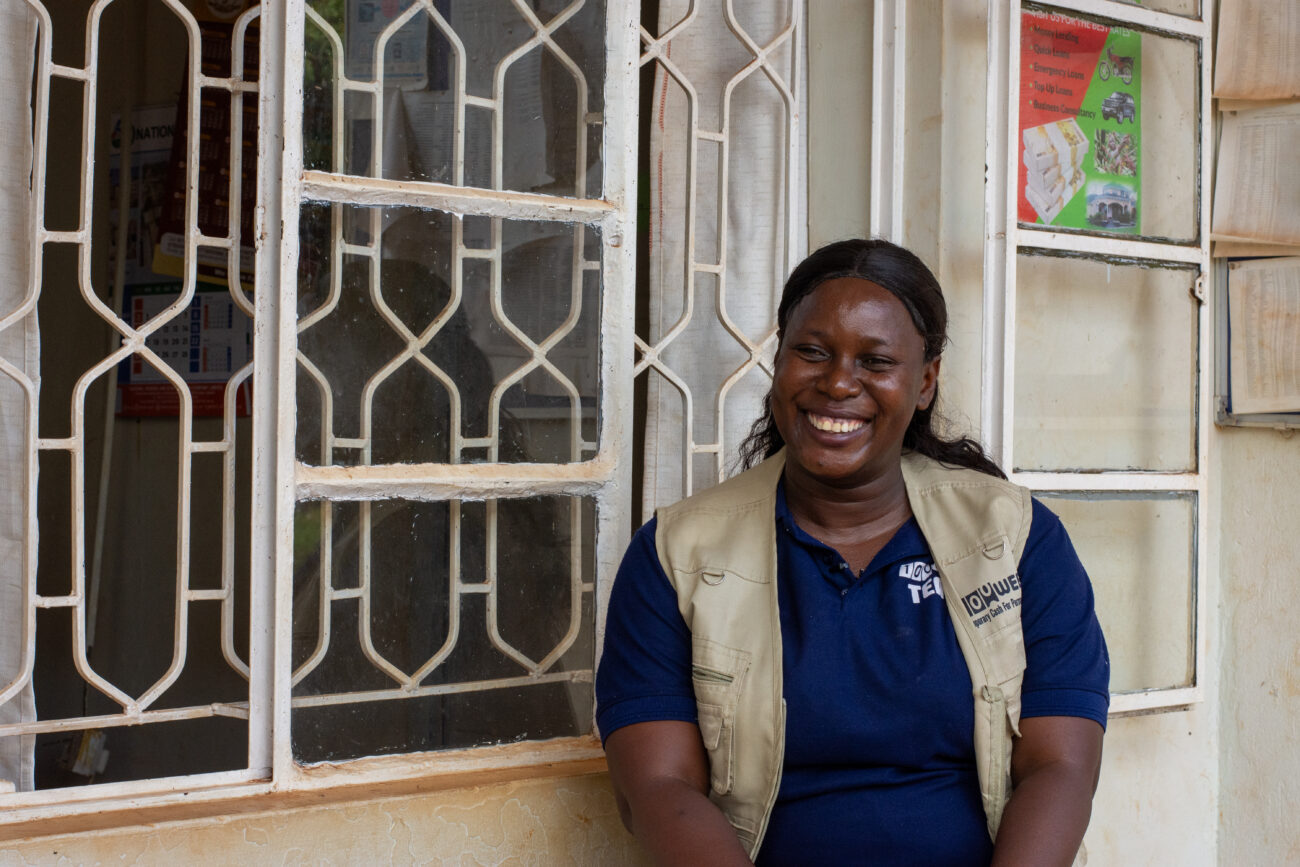
Since joining 100Weeks in 2019, Catherine has supported more than 2,000 Ugandan women throughout the programme. Within the CFYE youth cohort alone, over 600 young women have received financial support, training, and a community of peers to grow and organise with. But for Catherine, it is not just about the numbers. What stays with her are the stories, the connections, and the individual lives behind them;
“We are proud of the young people and the women who are entrepreneurs. Most of the women we found and enrolled at the selection stage were housewives or casual labourers. They didn’t know or have hope for what was going to happen the next day. The women are now less worried and have created more jobs and more impact in the community where they are present.”
Coaching as a Calling: Juliet Kimala’s Story
While Catherine works at the national level, Juliet Kimala brings the programme to life on the ground. A mother of twins and a dedicated coach, she leads two groups of women in Mitala Maria and beams with joy when asked about her work: “I enjoy working with women, I enjoy the trainings, they are giving me courage, and they are giving my women courage” she says, smiling.
Her favourite sessions cover financial literacy – budgeting, debt management, and planning for the future. Over time, she has watched women enter the programme unsure of tomorrow, facing food insecurity, unstable housing, or being unable to send their children to school. After completing the training, she has then watched those same women build small businesses, acquire land or homes, save money, and gain the confidence to plan ahead. “They are now saving; they can get loans. They are able to manage their debts…So financial management has helped them very, very much”, Juliet says proudly.
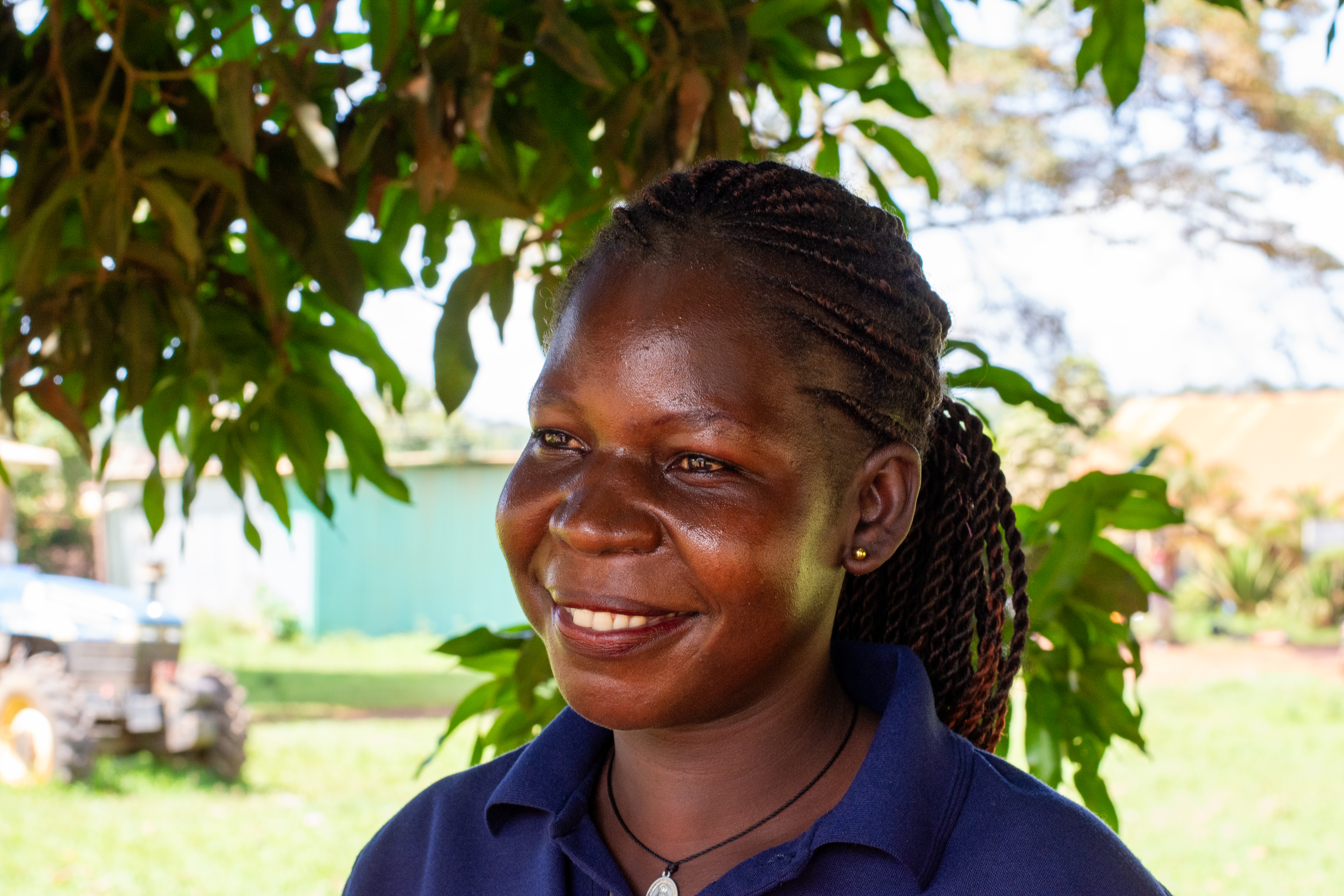
Not only has Juliet witnessed this in the women she trains, but she has also experienced it herself. By saving alongside her groups, she was able to support her husband in building their family home.
“What I teach the women is what I must also do. I cannot train what I don’t live,” Juliet explains.
The programme strengthened not only the women she coaches, but also her own confidence, and role in her community. Now Juliet’s connection with the women goes far beyond coaching, as they come together to discuss both finances and their personal lives. “You cannot do anything bad to me when my women are there,” Juliet laughs and continues; “They love me. And I love them”. She attends birthday parties, weddings, and funerals, and regularly visits trainees at their businesses to cheer them on. Even after graduation, the women ask her to reteach financial modules they found meaningful. It’s no surprise that at every community gathering, there is always a seat saved for ‘Coach Juliet’.
Building Trust One Transfer at a Time
Despite the success and trust that the 100Weeks programme experiences now, it did not come without its challenges. Catherine remembers the early days when many young women could not believe that cash transfer programmes were real or would worry about the source of the funds.
But Catherine believed in the model. She visited communities to build trust and worked closely with CFYE Country Lead in Uganda to ensure that every activity was well measured and reported. Just as for Juliet, Catherine’s passion for her job lies in her commitment to the women. As a mother of one daughter, she affectionately extends that label to the young women in the programme. And like any mother, she does not pick favourites. However, there is one story that remains especially close to her heart.
Catherine speaks of a young woman suffering with epilepsy who lived in a poorly built home and worked as a tailor in someone else’s shop. After one year in the programme, she had saved more than a million Ugandan shillings. A big smile appears in Catherine’s face when she describes the changes that happened in this young woman’s life;
“She managed to buy herself a sewing machine, and she now makes sweaters and sells them to the school. She also managed to find a husband…she found love…and she gave birth to her child and named the child Catherine”.
Now every time Catherine passes the home of little baby Catherine, she thinks; “I know I have a child there. She will forever be in my heart”.
Bonds that Outlast the Programme
Whether it is Catherine carrying ‘baby Catherine’ in her heart, or Juliet celebrating milestones with her trainees, the bonds built through the programme reach far beyond weekly transfers and trainings. The partnership between CFYE and 100Weeks begun with funding, but what followed was not transactional. Through the programme, Catherine, Juliet, and the women have built a community that invests in each other, shares knowledge, and encourages women to grow – together.
As we celebrate International Women’s Day 2026, this is what the “Rights. Justice. Action. For ALL Women and Girls”-theme looks like in practice: communities and organisations coming together to support women’s freedom to choose to work, participate, and lead. Catherine captures that vision best when she talks about the future:
“My dream is that I lift them (women) up, empower them, and change their lives. My dream is to scale up to as many Ugandan youths as possible and create impact”.
This International Women’s Day, let us draw inspiration from Catherine and Juliet, and contribute to inclusion, systemic change and debunking stereotypes with the tools we have, whether it is knowledge, resources, visibility, advocacy, education, training, mentorship, or time, to support women and girls everywhere.





 Sade Aalto-Setala
 December 3, 2025